When to Call a HVAC Professional vs DIY
Published: 2026-04-04 · By BestCool Heating and Air Conditioning
The internet makes HVAC maintenance seem manageable and achievable for homeowners. YouTube videos suggest "Replace your thermostat in 30 minutes." Articles claim "Duct sealing is easy DIY work." Blogs advertise "Charge your AC yourself and save hundreds." The reality is considerably more nuanced and complex. Some HVAC work is genuinely DIY-friendly and safe for homeowners to perform. Other tasks require professional licensing, expensive specialized tools, and extensive training. Attempting the wrong ones costs significant money to fix afterward, wastes your time, and potentially endangers your family's safety.
Safe and Appropriate DIY HVAC Tasks
Air filter replacement is the most basic and genuinely important HVAC task you can perform yourself. A clogged filter severely restricts airflow, reduces system efficiency, and strains your equipment significantly. Replacement filters cost $10 to $30 depending on quality and size. Turn off your furnace using the thermostat switch or circuit breaker, locate your filter slot (usually found in your blower cabinet or return air ductwork—dimensions typically 16x25 or 20x25 inches), remove the old filter carefully while noting its exact dimensions and MERV rating, and slide in the replacement filter oriented correctly. Perform this task every 30 to 90 days during heating and cooling seasons. Different households require different replacement intervals—homes with pets need more frequent replacement, homes with multiple people having allergies need monthly replacement, while homes without pets or allergies might stretch to every 90 days.
Clearing blockages and debris around your outdoor AC condenser unit is safe, important maintenance work. Remove accumulated leaves, twigs, grass clippings, and other debris restricting airflow around the unit. Use a soft brush or leaf blower for cleaning—never use a pressure washer directly on the delicate coils as high-pressure water permanently bends fins. If fins are slightly bent, straightening them with a fin comb is possible if you're careful and gentle, but complete replacement is safer if fins are severely damaged or flattened.
Keeping return air vents and supply registers clear of obstruction falls squarely into the DIY category. Don't block return air vents with furniture placement or closed doors. Blocked returns cause pressure imbalances in ductwork and reduce overall system efficiency significantly. Supply vents should direct airflow freely into living spaces, not get buried behind couches or closets. Basic vent maintenance prevents efficiency loss.
Cleaning your thermostat of accumulated dust is completely harmless and safe. Gently wipe the screen and casing with a dry, soft cloth. If the thermostat requires battery replacement, carefully snap out the old batteries and insert new ones making certain the polarity markings (plus and minus) inside the compartment match your battery orientation. That's the entire scope of thermostat battery work.
Visually inspecting accessible ductwork in your attic, basement, or crawlspace is a fine DIY task. Walk through and carefully look for disconnected sections where duct pieces separated, crushed or flattened ducts restricting airflow, or missing insulation wrapping. Document what you see with photos or notes. That information helps a professional prioritize repairs and develop a repair strategy.
Tasks Absolutely Requiring Professional HVAC Expertise
Thermostat wiring work must remain with licensed professionals. Your thermostat has low-voltage wiring (typically 24 volts) creating the electrical connections from your thermostat to your furnace and AC unit. While 24 volts isn't dangerously high-voltage like main electrical service, improper wiring can damage expensive equipment or prevent the system from operating at all. Thermostat issues often trace back to power supply problems, not the thermostat itself. A professional diagnoses the actual problem correctly and replaces equipment appropriately.
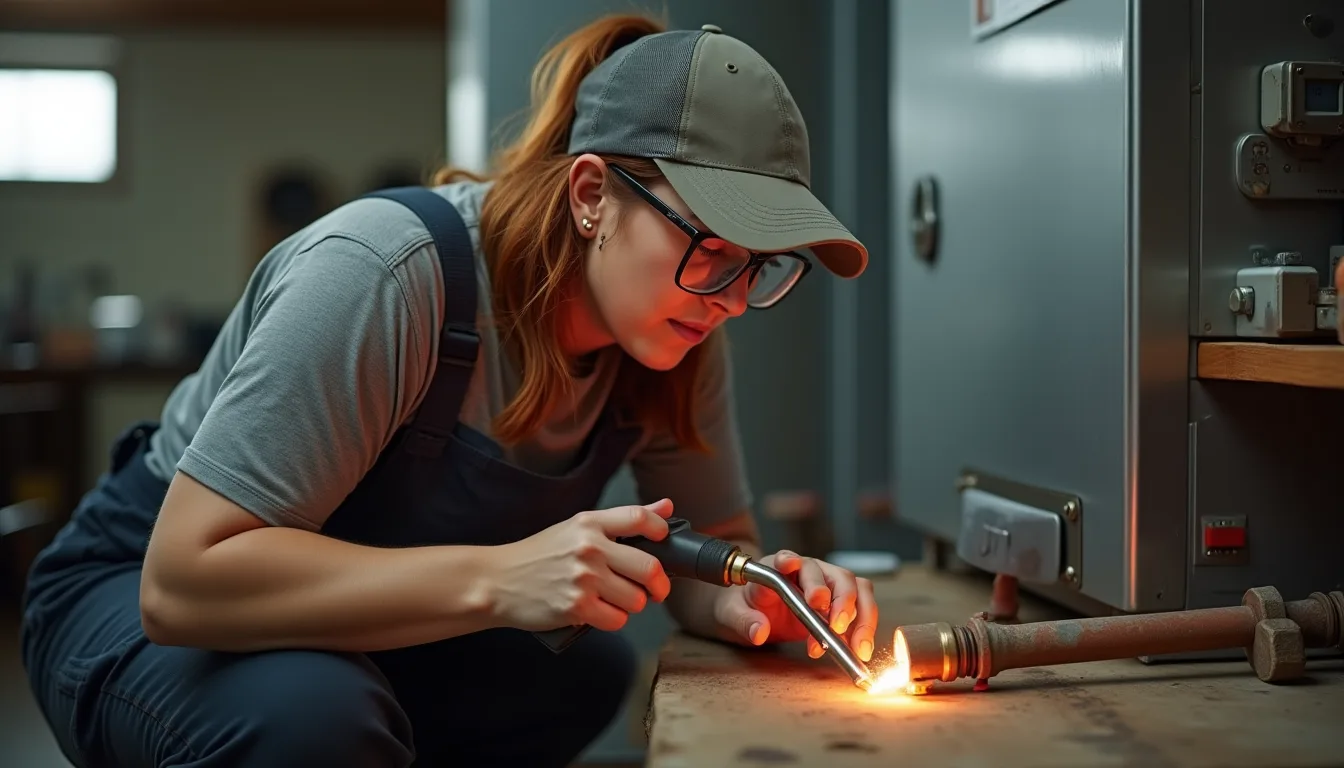
Furnace or air conditioner repair absolutely requires professional licensing and training. Your furnace is a combustion appliance operating at extremely high temperatures with moving mechanical parts and high-voltage electrical components. AC systems use pressurized refrigerant and operate at high voltage. Both systems demand thorough professional training and expertise. Attempting furnace diagnosis yourself risks damaging the equipment or, worse, creating dangerous carbon monoxide hazards. AC work requires EPA-certified refrigerant handling credentials and access to specialized testing gauges.
Ductwork sealing and repair is far more complicated than simply applying sealant tape. Properly sealing ducts requires professional pressure testing to identify leak locations precisely, then using appropriate mastic sealant or specialized tape to seal them. Many DIY-ers mistakenly think "duct tape" is the correct solution for ductwork (ironically, duct tape fails miserably on ductwork after a few months). Professional duct sealing includes pressure testing after sealing to verify that the leak is actually sealed and remains sealed.
Refrigerant recharging is federally regulated and strictly controlled. Only EPA-certified technicians can legally handle refrigerant. If your AC is low on refrigerant, the root cause is always a leak somewhere in the system—refrigerant shouldn't escape from a properly sealed system. A simple recharge without identifying and repairing the leak is temporary band-aid treatment that wastes refrigerant and money. A professional finds the leak source, repairs it properly, then recharges the system correctly to specification. Attempting this yourself is both illegal under EPA regulations and completely ineffective.
Electrical work on your furnace or AC—replacing a capacitor, contactor, or compressor relay—absolutely must stay with licensed electricians or HVAC technicians certified for this work. These components carry serious electrical hazard and improper replacement permanently damages expensive equipment, requiring complete replacement.
The Gray Area: When You Legitimately Need Professional Help Deciding
Your furnace is short-cycling (running for just a few minutes, stopping, then immediately starting again repeatedly). You read online that it might be caused by a dirty flame sensor. Can you clean it yourself? Theoretically, carefully removing the sensor, gently cleaning it with appropriate materials, and reinserting it is possible. However, improper sensor removal, damage to the sensor during cleaning, or incorrect reinstallation creates ignition failure and safety hazards. The cost of a professional flame sensor cleaning is $100 to $150. The cost of replacing a sensor you damaged is $300 to $500. The labor savings simply don't justify the financial and safety risk.
Your thermostat batteries are dead, preventing your system from responding to temperature changes. You could replace batteries yourself—that's safe. But if the system still doesn't respond after you install new batteries, the problem is elsewhere—typically a thermostat malfunction or power supply issue requiring professional diagnosis. It's worth trying battery replacement as a first troubleshooting step, but be prepared to call a technician if that doesn't solve the problem.
Your AC isn't cooling effectively. You notice the outdoor fan isn't spinning at all. Can you restart it by flipping the circuit breaker off and back on? Yes, that's completely safe. But if the fan doesn't restart and spin after you reset the breaker, the problem is an electrical malfunction or mechanical failure requiring professional service. Don't repeatedly flip breakers hoping the problem resolves—you're just guessing blindly and potentially creating additional electrical problems.
Cost-Benefit Analysis: DIY Versus Professional Service
Saving money on service calls feels appealing in the moment. However, improper HVAC work almost always costs significantly more to fix than the original problem. A furnace component replaced incorrectly might cause complete system failure requiring replacement. Refrigerant added without identifying the leak wastes money on the refrigerant and doesn't solve the underlying problem. Ductwork sealed with regular duct tape instead of proper mastic sealant fails within months and requires professional sealing again.
In Avon and Hendricks County, a basic service call costs $150 to $300 depending on the time of day and problem complexity. If your DIY mistake requires a professional visit to diagnose and fix what you started, you've paid the service fee plus additional costs to correct your error. The original DIY savings disappear completely.
Professional Tools and Licensing Requirements
HVAC professionals own specialized tools that average homeowners don't possess. Manifold gauges for precise refrigerant testing. Combustion analyzers for furnace diagnostics and safety verification. Duct pressure testers for identifying leaks. Electrical multimeters rated for the high voltages present in HVAC equipment. Proper refrigerant recovery equipment (required by law for safe refrigerant handling). Insulated tools rated for live electrical work.
In Indiana, HVAC technicians are licensed by the state and must maintain continuing education throughout their careers. Licensing ensures they thoroughly understand safety codes, EPA regulations, and proper installation practices. Your responsibility is ensuring the person working on your system has current credentials and verifiable licensing.
Decision Tree: When to Call Professional Help
Ask yourself these questions in order: Does this task involve combustion, electricity, refrigerant, or pressurized components? If yes, call a professional immediately. Does it require special tools or testing equipment you don't own? Call a professional. Are there building codes or permitting requirements involved? Call a professional. Could a mistake result in equipment damage or personal injury? Call a professional without hesitation.
Does this task only involve replacing a filter, clearing visible debris, or basic visual inspection? DIY is appropriate. Are you confident in your ability and have you verified the steps through reputable sources beyond just YouTube? DIY might work. Is the absolute worst-case outcome simply needing a service call to undo your work? This is an acceptable DIY scenario—you've only lost time and the service fee if something goes wrong.
Finding the Right Professional Contractor
When you decide professional help is needed, choose a contractor with verifiable licensing, current insurance, and strong local reviews. Ask neighbors and coworkers for referrals, check online ratings carefully, and call multiple contractors for detailed quotes. Interview contractors to understand their diagnostic process. If they immediately recommend expensive replacement without explaining why repair isn't possible, get a second opinion from another contractor before deciding.
BestCool handles HVAC work properly while respecting your equipment and budget. We provide free diagnosis on all service calls so you fully understand the problem before committing to repair. We explain all available options and let you make the decision. We're licensed, insured, and available 24/7 for true emergencies.
The bottom line: DIY saves modest money on filter replacement and debris clearing. Everything else—diagnosis, repair, installation—relies on professional expertise and training. Know where the line is and protect your comfort, your equipment, and your family's safety.
Questions about whether a specific task is genuinely DIY-safe? Call BestCool at (463) 229-8619. We'll advise honestly about what you can safely handle and what absolutely needs professional attention.